Korean Transit Card Transfer Discount 30-Min Rule: Bus & Subway Transfers and Tap-Off Penalties Explained
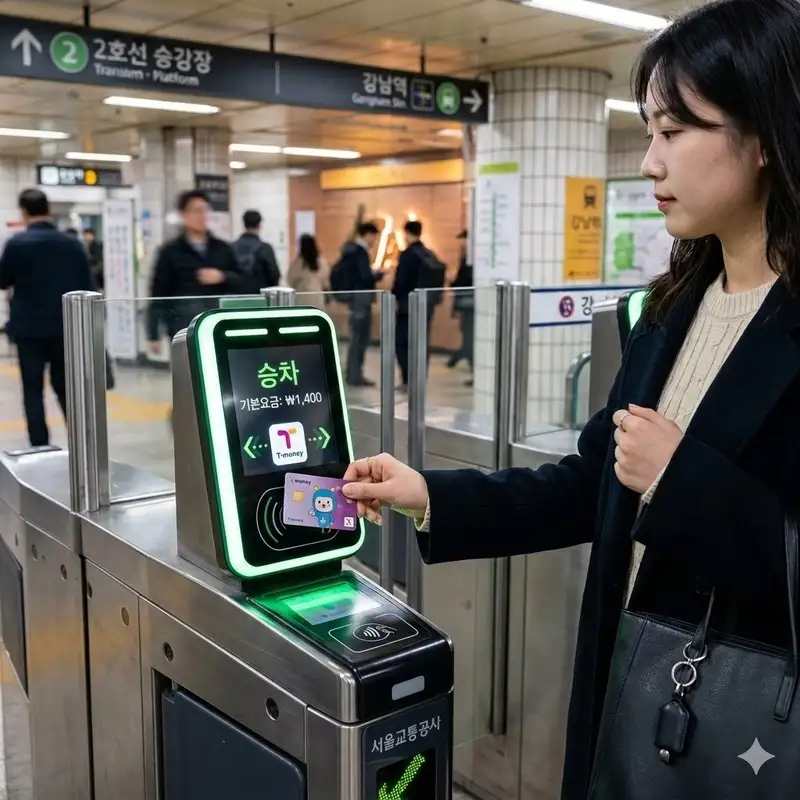
Practical Guide to Korean Transit Card Transfer Discounts
Korea's public transit transfer system can reduce fares when you tap off and follow the transfer rules. Even first-time visitors can travel smoothly by keeping these essential tips in mind.
- Always Tap Off When Exiting: Tapping off on buses and subways is required. Missing a tap-off can break a transfer or lead to an additional fare; the exact fare adjustment depends on the route and transit service.
- Transfer Within 30 Minutes (1 Hour at Night): You must tap onto your next transit vehicle within 30 minutes of tapping off. During night hours (9 PM to 7 AM), this window extends to 1 hour.
- No Discount for Re-boarding the Same Bus Line: Boarding the exact same bus route number again will not trigger a transfer discount; a full new base fare will be deducted.
- Up to 4 Transfers (5 Rides Total): You can transfer up to 4 times within the 30-minute window, paying only distance-based surcharge increments.
- Listen for Voice Prompts: A chime saying "Hwan-seung-ip-ni-da" (Transfer) confirms discount application. Use a single card or smartphone NFC rather than overlapping multiple cards in a wallet.
What This Guide Covers
- What Happens When You Forget to Tap Off?
- The 30-Minute Transfer Window and 1-Hour Night Extension
- Why You Cannot Get a Transfer Discount on the Same Bus Number
- Maximum 4 Transfers and the Distance-Based Fare System
- Card Etiquette and Practical Audio Alerts
Even I occasionally make the mistake of forgetting to tap off when exiting public transit, especially late at night when I'm exhausted. I remember once heading home after grabbing drinks late with colleagues after work; I was so tired that I forgot to tap off after riding just 5 stops. I remember paying more than expected after that five-stop ride. I no longer have the fare record, so I am sharing this as a personal recollection, not as a description of the exact fare calculation.
Here is how Seoul’s transfer rules work and why it is important to tap off.
Seoul’s transfer guide says you must tap off to calculate distance-based fares and remain eligible for a transfer discount. Missing the tap can break a transfer and result in an additional fare. The exact adjustment depends on the trip. (Seoul’s integrated transfer discount guide)
What Happens When You Forget to Tap Off?
One of the most common mistakes travelers make in Korea is getting off a bus or subway without tapping their transit card on the card reader.
While chatting with a foreign friend about Korean public transit, our conversation turned to transfers. My friend mentioned having traveled to many countries where fares are collected only upon entry, so people rarely tap off when getting off.
In Seoul, missing a tap-off can break a transfer and lead to an additional fare. The exact adjustment depends on the transit service and trip.
Seoul’s official guide says a missing tap-off breaks transfer eligibility and can lead to an additional fare. It does not describe every case as a maximum-distance penalty, so check the route-specific fare guidance if you need to resolve a charge.
The 30-Minute Transfer Window and 1-Hour Night Extension
To receive a transfer discount between buses and subways, you must tap your card on the entrance reader of your next vehicle within 30 minutes of tapping off the previous one.
This 30-minute window can go by fast if you are walking from a subway exit to a bus stop, waiting at crosswalks, or dealing with longer bus intervals. Moving promptly after tapping off is essential to keep the discount.
However, between 9:00 PM and 7:00 AM the following morning, the system automatically extends the transfer allowance to 1 hour to account for longer night dispatch intervals. Knowing this allows for a much more relaxed commute late at night.
Why You Cannot Get a Transfer Discount on the Same Bus Number
Many commuters are surprised when they re-board the same bus route hoping for a transfer discount, only to find the full base fare charged again.
Korea's transfer discount system is designed specifically to support travel between different transit routes. For example, if you get off bus 856 to run a quick errand and then board bus 856 again, the system treats this as a brand-new trip rather than a transfer, charging the base fare once more.
If you need to make a round trip or continue after a quick stop, it is best to check in advance for an alternative bus line or switch to the subway. That way, you can fully maintain your transfer discount benefits.
Maximum 4 Transfers and the Distance-Based Fare System
Using a prepaid or contactless transit card allows up to 5 total rides (4 transfers) within a single journey under the transfer discount scheme.
Transferring does not mean traveling completely free forever. Within the base distance—10 km for subways and standard buses—you only pay the initial base fare. Once your combined travel distance exceeds 10 km, an extra fare of 100 KRW is added for every additional 5 km upon final tap-off.
When tapping off, a plus sign (+) next to the balance on the reader display indicates this distance surcharge, not a penalty for an error.
Card Etiquette and Practical Audio Alerts
Paying attention to the screen and voice prompts on the card reader when boarding will instantly tell you if your transfer discount was applied correctly.
If the reader chime says "Seung-cha-im-ni-da" (Boarding), it is your first ride. If it announces "Hwan-seung-im-ni-da" (Transfer), your transfer discount within the 30-minute window was successfully registered. If multiple transit cards overlap in your wallet, the reader will announce "Please touch only one card." Using a single card or smartphone NFC payment avoids this error.
When riding a bus with family or friends, a single card can cover multiple passengers. Tell the driver the number of people first, such as "two people," then tap the card once, and the fare for everyone is deducted together. If you tap only once without stating the headcount, the remaining companions may be treated as fare evaders, so be careful.
Subways are different. Because you pass through the gate one person at a time, and once your card is processed at the gate it cannot be tapped again until you have fully exited, everyone traveling together must carry their own transit card. Passing the card back to the person behind you to get everyone through is not possible in Korea.
Once you get into the habit of tapping off every time you exit public transit in the Seoul metropolitan area, you can travel anywhere in Korea at the lowest possible cost and with the greatest efficiency.
📌 Recommended Posts
이 리뷰를 한국어로 읽고 싶으신가요?
🇰🇷 한국어 리뷰 읽기